
26 Oct 2026
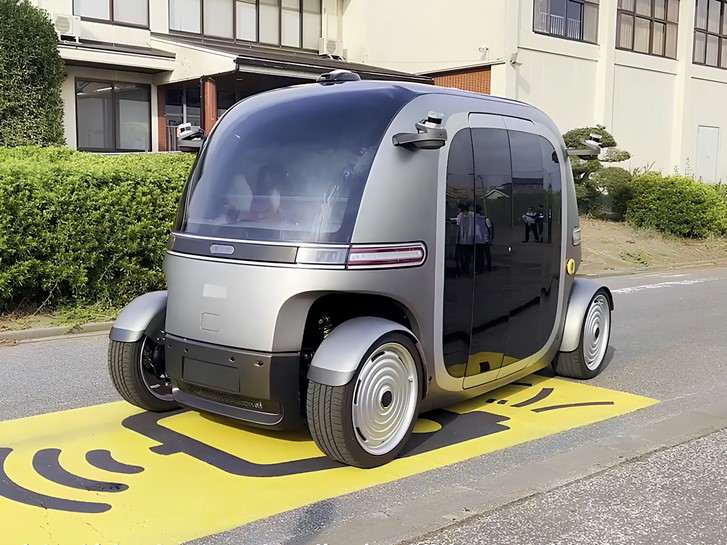
Getting one autonomous machine to work in a controlled demonstration is a real engineering achievement. A small team tunes it by hand, reads the logs on a laptop and fixes problems as they appear, with the engineers standing a few meters away.
Deploying fifty or five hundred of the same machine is a different challenge. Vehicles are built on a production line by people who never met the prototype team. They work in places with poor reception, on shifts nobody is watching, and they need software changes long after they leave the factory. At that point, a navigation system that only delivers an accurate position is not enough. It has to behave like a vehicle component: installed the same way every time, configured without a laptop at every unit, able to report its own health and able to accept updates safely.
Accuracy is the question everyone asks during the prototype stage. When an autonomous vehicle fleet moves toward production, the questions on the engineering team's list start to look different.
None of these questions are about centimeters. All of them decide whether a fleet can be run at a reasonable cost.
On a prototype, the positioning receiver is often an accessory: a box on a bracket, a serial cable to a computer and a custom script that parses the output. On a production vehicle, every component has to fit the electrical and data architecture, which usually means automotive networks, defined connectors and time synchronization with the rest of the sensor suite.
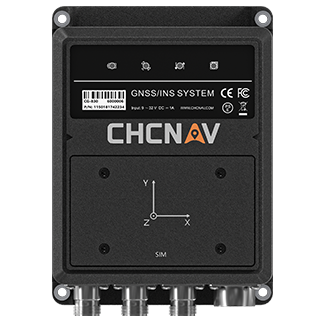
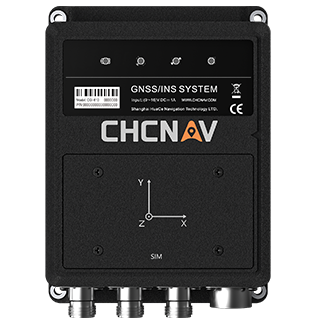
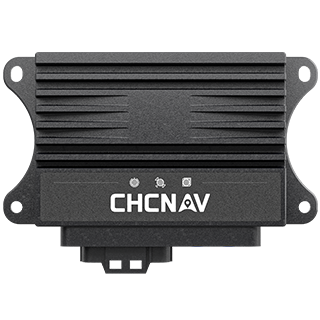
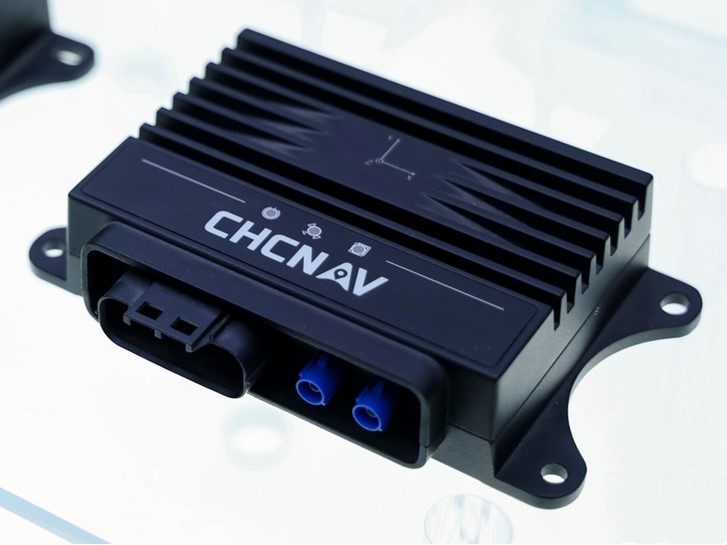
That is why we designed the CGI-230 around vehicle interfaces. The automotive-grade GNSS/INS system offers serial, 100BASE-T1 automotive Ethernet and CAN FD interfaces, so it can be adapted to different vehicle platforms and operating modes rather than forcing the vehicle to adapt to it. It also supports gPTP and PPS for timing, which matters when position data has to be aligned with cameras, LiDAR and radar on the same network. Inside, a full-constellation GNSS module and a 6-axis IMU are fused with dead reckoning by our CTCLIB tightly coupled algorithms, supporting autonomous, assisted and robotic mobility applications.
Calibration that takes an expert half a day is acceptable once. Across a fleet it becomes a bottleneck and a source of variation between vehicles. With the CGI-230, only the lever arm value and the mounting angle need to be calibrated at installation; the CTCLIB2.0 algorithm then estimates remaining errors automatically and compensates for them in the output.
The unit also needs no additional wheel speed sensor, because it can use the vehicle's own CAN odometer signal. Fewer extra parts per vehicle means fewer parts to stock, fit and replace, and it makes moving a unit from one vehicle to another quicker.
A fleet needs one known configuration, applied to every unit and changed in a controlled way. Configuring each vehicle by hand invites drift, such as a parameter left over from a test. Remote, centrally managed configuration is a fleet requirement in its own right, and the navigation system has to make it possible.
The CGI-230 is configured and queried by commands sent over its serial or network interface, and it supports fast batch configuration through instruction injection. Its multimodal adaptation lets integrators select the algorithm mode that suits a given platform, so a car, a low-speed vehicle and a robot can each run the right settings from the same hardware.
When a prototype misbehaves, an engineer investigates. When a fleet vehicle misbehaves, the fleet's monitoring system has to know which component raised the issue and what kind of issue it is. A navigation unit that only goes silent forces a technician to visit the vehicle and start guessing.
The CGI-230 supports UDS diagnostics and fault messaging, using the same diagnostic approach that automotive engineers apply to other electronic control units. Faults can be read through tools the team already uses, rather than through a separate, navigation-only workflow.
Autonomy software keeps evolving after vehicles ship, and the positioning layer evolves with it. A production fleet needs a way to update navigation firmware without removing units, along with the version control and staged rollout practices that keep an update from reaching every vehicle at once before it has been proven on a few.
For the CGI-230, upgrade capability covers CAN FD and Ethernet using the DoCAN and DoIP protocols, the standard diagnostic transport protocols of the automotive world. That allows navigation updates to follow the same in-vehicle routes as other control units.
A fleet is only as predictable as its least predictable vehicle. If one unit behaves differently under trees, in a tunnel or next to a building, the planning and safety logic built on top of it has to absorb that difference. Consistency comes from identical hardware, identical configuration and an algorithm that handles difficult conditions in the same way on every unit. Our tightly coupled GNSS/INS approach is designed to keep position and attitude continuous where GNSS signals are obstructed, degraded or temporarily lost, and correction data reaching every vehicle reliably is part of that consistency too.
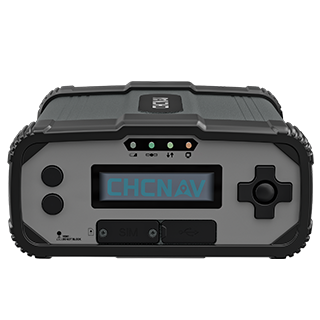
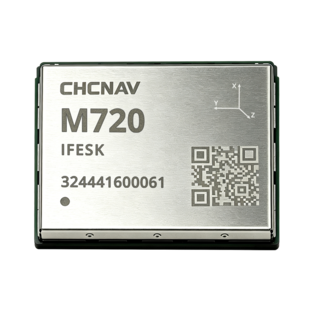
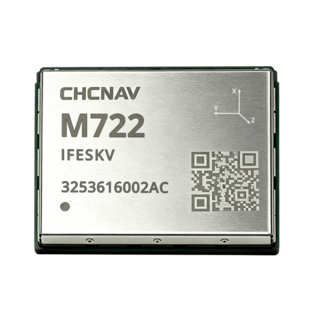
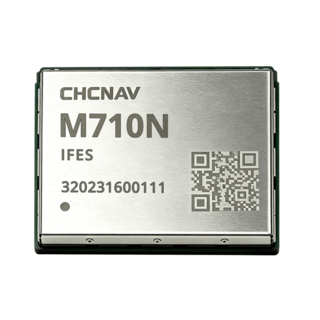
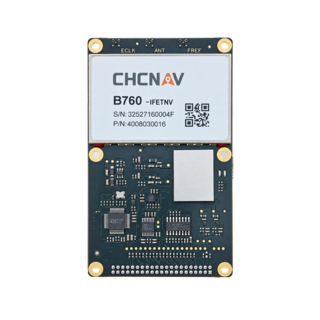
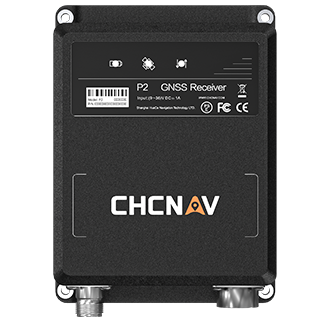
Not every autonomous machine is a compact vehicle. For heavier platforms and harsher environments, the CGI-610 offers an IP67, vibration and shock resistant design with Ethernet, serial, CAN, low-latency PPS and USB ports, plus Wi-Fi and 4G LTE connectivity. It accepts external odometer input for longer GNSS outages and outputs data at up to 100 Hz, which suits 3D machine control, port automation, industrial automation and robotics. Teams embedding positioning directly on their own electronics can look at our M7 and B7 Series GNSS modules and boards.
The full range sits on our navigation and positioning solutions page. For one example of a fleet already in daily service, read how our positioning supports autonomous sweeping robots.
Every extra sensor, cable, calibration step and custom tool adds cost for the life of every vehicle. Navigation that uses the vehicle's existing networks, signals and diagnostic protocols takes items off that list, and across hundreds of vehicles and several years of operation, those removed steps can matter as much to the operating budget as the specification sheet.
Reliable autonomy is not only about getting one machine to navigate accurately. It is about making navigation practical to deploy, integrate and maintain across an entire fleet.
CHC Navigation (CHCNAV) develops advanced mapping, navigation, and positioning solutions designed to increase productivity and efficiency. Serving industries such as geospatial, agriculture, machine control and autonomy, CHCNAV delivers innovative technologies that empower professionals and drive industry advancement. With a global presence spanning over 140 countries and a team of more than 2,200 professionals, CHC Navigation is recognized as a leader in the geospatial industry and beyond. For more information about CHC Navigation [300627.SZ], please visit: https://navigation.chcnav.com/about/overview
Planning to scale your autonomous fleet?